
(read time: 4 mins)
Revenue isn’t lost in big dramatic failures, it slips away through small, repeated mistakes that compound over months and years.
Subscription billing sits at the center of this compounding effect. When it’s fragmented, manual, or out of sync with the rest of the revenue engine, every downstream motion becomes more expensive: customer acquisition, retention, reporting, forecasting, and even product-led growth.
This guide breaks down the nine most costly subscription billing mistakes Revenue teams unknowingly make, and why these seemingly small breakdowns create outsized financial and operational damage.
1. Treating billing as a back-office function
When billing is siloed inside Finance, the revenue org loses sight of the very thing powering renewals: what the customer actually bought.
The cost: misaligned expectations, preventable churn, incorrect renewals, and frustrated teams that can’t answer simple customer questions.
Billing is a revenue motion. When it’s detached, every department pays for it.
2. Relying on manual proration, amendments, and adjustments
Proration isn’t difficult, until you try to scale it.
Teams that rely on spreadsheets or half-automated systems to manage amendments (add-ons, removals, mid-term adjustments, upgrades/downgrades) create an invisible tax on every contract.
The cost: delayed invoices, incorrect amounts, credit leakage, and hours of reconciliation. Over a year, this becomes the equivalent of a full-time headcount spent fixing errors.
3. Allowing subscription data to drift out of sync
The subscription record is the heartbeat of the revenue lifecycle.
When it isn’t aligned across quoting, billing, renewals, collections, and your CRM, teams create multiple “truths” that must be stitched together manually.
The cost: incorrect ARR/MRR reporting, revenue leakage, missed renewals, mis-forecasting, and a near-impossible audit trail.
4. Overlooking the renewal structure at the time of original sale
Teams often focus heavily on closing the initial deal but neglect how that deal will renew, expand, or contract.
If renewal terms aren’t created accurately (or worse, recreated from scratch at renewal time) errors become unavoidable.
The cost: revenue clawbacks, inconsistent customer pricing, inaccurate renewal quotes, and needless friction for CSMs.
5. Allowing discounts to erode over time
In many SaaS orgs, discounting gets buried across systems, approval chains, and one-off deal structures. As contracts renew, expand, or amend, the original rationale for discounts is often lost.
The cost: quiet margin erosion, misreported ARR, and unpredictable renewal performance.
Discounts should be data-driven and traceable, not mysterious artifacts of deals long past.
6. Fragmenting billing across too many tools
A subscription often touches quoting, invoicing, payments, tax, provisioning, and renewals. Many teams solve each layer with a different tool.
A techstack that becomes a patchwork of systems that all believe they own the truth.
The cost: sync failures, billing delays, duplicated data, unexpected outages, and an expensive dependence on ops teams who spend more time troubleshooting than improving revenue flow.
7. Failing to align billing schedules with contract terms
Billing schedules and contract terms should match exactly, but in many RevOps situations, they don’t.
Common misalignments include:
- Billing monthly but contracting annually
- Incorrect anniversary dates
- Renewal dates drifting because of proration or missed invoices
- A mismatch between product terms and invoice timing
The cost: frustrated customers, unpredictable cash flow, and avoidable support tickets.
8. Missing the opportunity to automate usage and variable billing
Usage-based pricing models are powerful, but only when usage data flows cleanly into billing.
Many companies still batch usage manually, upload CSVs, or reconcile consumption long after the fact. As usage scales, that delay introduces uncertainty and risk.
The cost: delayed invoices, underbilling, and a slow erosion of trust when charges don’t match expectations.
9. Treating revenue reporting as a separate operation
When the subscription engine isn’t tightly connected to revenue reporting, teams end up re-building the deal structure inside Finance tools. Every amendment, partial credit, or co-term compounds the complexity.
The cost: audit challenges, inconsistent reporting, and painful month-end close cycles.
Revenue reporting should be a downstream automation, not a downstream reconstruction.
Why these 9 mistakes compound so quickly in your SaaS billing platform
Individually, each mistake seems fixable. Together, they create:
- Revenue leakage that accumulates invisibly
- Operations teams drowning in manual work
- Inconsistent ARR/MRR that erodes investor confidence
- Customers receiving inconsistent or incorrect billing
- A renewal cycle that’s harder than it needs to be
Fixing subscription billing isn’t about making Finance’s life easier, it’s about protecting and accelerating the entire revenue lifecycle. The organizations that scale the fastest are the ones that treat subscription management as a strategic foundation, and not an operational burden.
The Solution
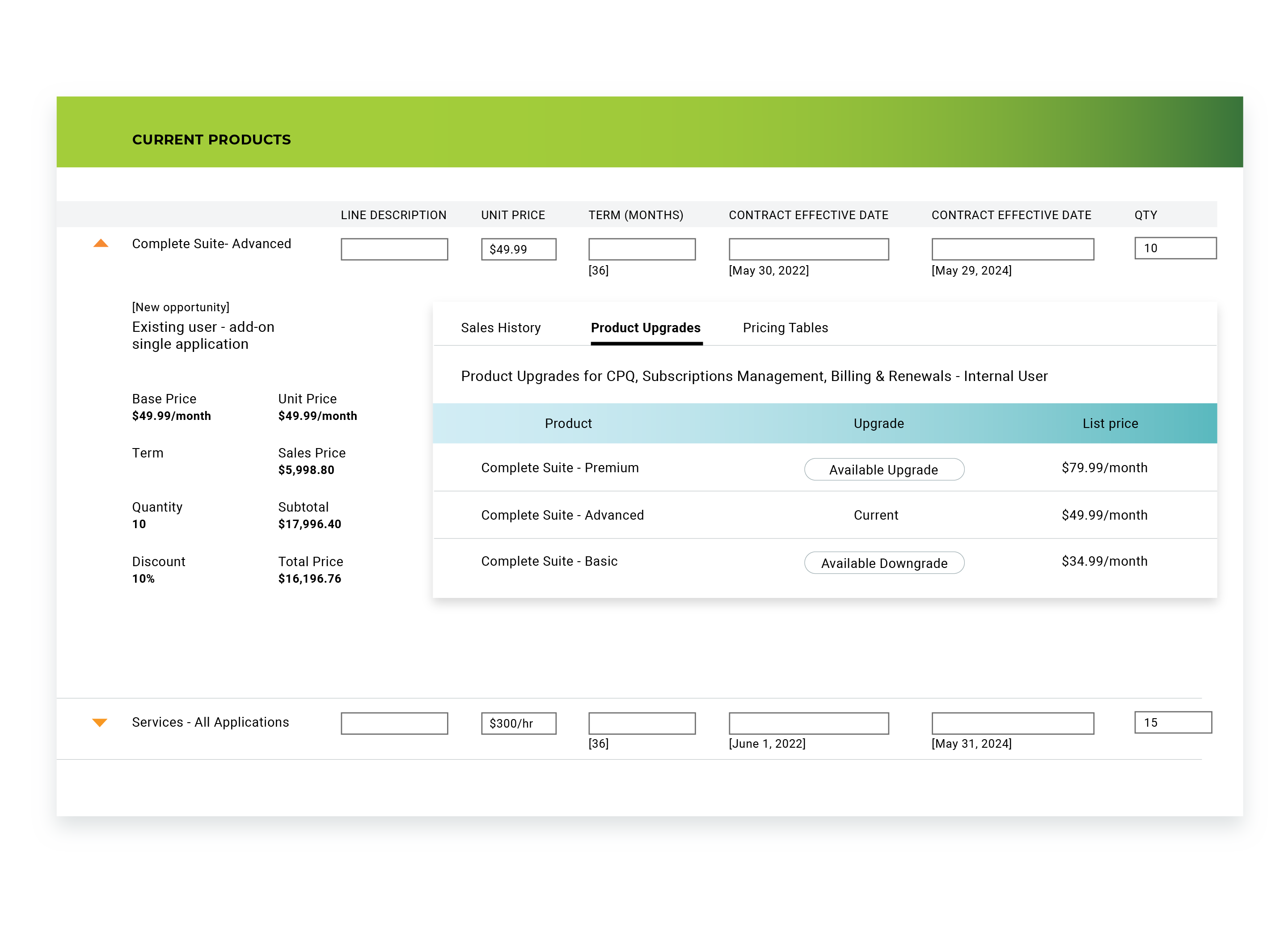
Ditch manual spreadsheets and clunky workarounds for a scalable, standardized subscription management engine.
SAASTEPS provides a subscription management solution designed to scale. From simple monthly renewals to complex usage-based pricing models, manage all subscription types with ease. Key improvements included:
• Bulk editing of subscription items in just a few clicks
• A standardized structure for pricing, renewals, and terms
• Organized, reliable data for reporting and forecasting
• No API throttling, no sync delays; everything running [natively] in Salesforce