
[read time: 3 mins]
Recent industry reviews, including G2’s guide to the Best Subscription Management Software, highlight how essential billing infrastructure is to predictable recurring revenue. However, a major decision point for revenue operations (RevOps) and finance leaders is architectural: whether to adopt third-party integrated platforms, legacy enterprise CPQ systems, or a 100% Salesforce-native solution (like SAASTEPS).
Understanding the true total cost of ownership (TCO) between siloed integration and native design reveals why native systems unlock superior automation and artificial intelligence performance.
The hidden costs of integrated, siloed billing systems
Popular off-platform subscription tools (such as Chargebee, Paddle, Maxio, and Stripe Billing) process billing in an external cloud database. Connecting these platforms to Salesforce CRM requires API connectors, middleware, and custom field mapping.
This siloed approach introduces distinct operational risks and expenses:
- Continuous Consulting & Developer Overhead: External connectors and custom API syncs frequently break when CRM schemas or billing rules update. Companies often find themselves trapped in perpetual consulting agreements or relying on specialized developers to debug broken data pipelines, fix post-billing errors, and manually reconcile invoices.
- Data Latency and Synchronization Drift: When quote creation happens in Salesforce but subscription state, invoice status, and usage data reside in an external database like Sage Intacct or Maxio, teams work from conflicting sources of truth. This leads to billing disputes, delayed revenue recognition, and missed renewal windows.
- Escalating Middleware Expenses: In addition to core software licensing, businesses pay recurring fees for integration tools, API bandwidth, and ongoing maintenance, significantly raising the total cost of ownership over time.
SAASTEPS vs. traditional vendors: declarative admin control
The primary differentiator between SAASTEPS and other platforms on the market is the total elimination of integration complexity and consultant dependence.
Traditional off-platform vendors (Chargebee, Maxio, Stripe Billing)
While these tools offer specialized billing engines, they exist outside Salesforce. Every workflow requires data to be pushed across third-party boundaries, requiring integration maintenance and ongoing IT oversight.
Legacy enterprise native tools (Salesforce Revenue Cloud)
Although built on Salesforce, enterprise platforms like Salesforce Revenue Cloud (formerly CPQ and Billing) historically require multi-month, high-cost implementations led by system integrator (SI) consulting firms. Maintaining custom APEX code and complex pricing rules often requires dedicated developers.
SAASTEPS: The Salesforce-native approach
SAASTEPS provides an end-to-end Revenue Lifecycle Management suite that is 100% native to Salesforce and completely declarative.
- Zero Developers Needed: Existing Salesforce Administrators can configure, modify, and manage CPQ, subscription lifecycle workflows, and automated invoicing without writing custom code or hiring external consultants.
- Rapid Deployment: Instead of spending 6 to 12 months in consulting discovery, organizations can self-implement in sandbox environments or utilize structured quick-start onboarding packages that take weeks rather than quarters.
- Unified Object Model: Quotes, products, contracts, subscriptions, invoices, billing, renewals, and payment tokens live directly on standard and custom Salesforce objects, keeping data instantly accessible across the organization.
Why native architecture unlocks true enterprise AI
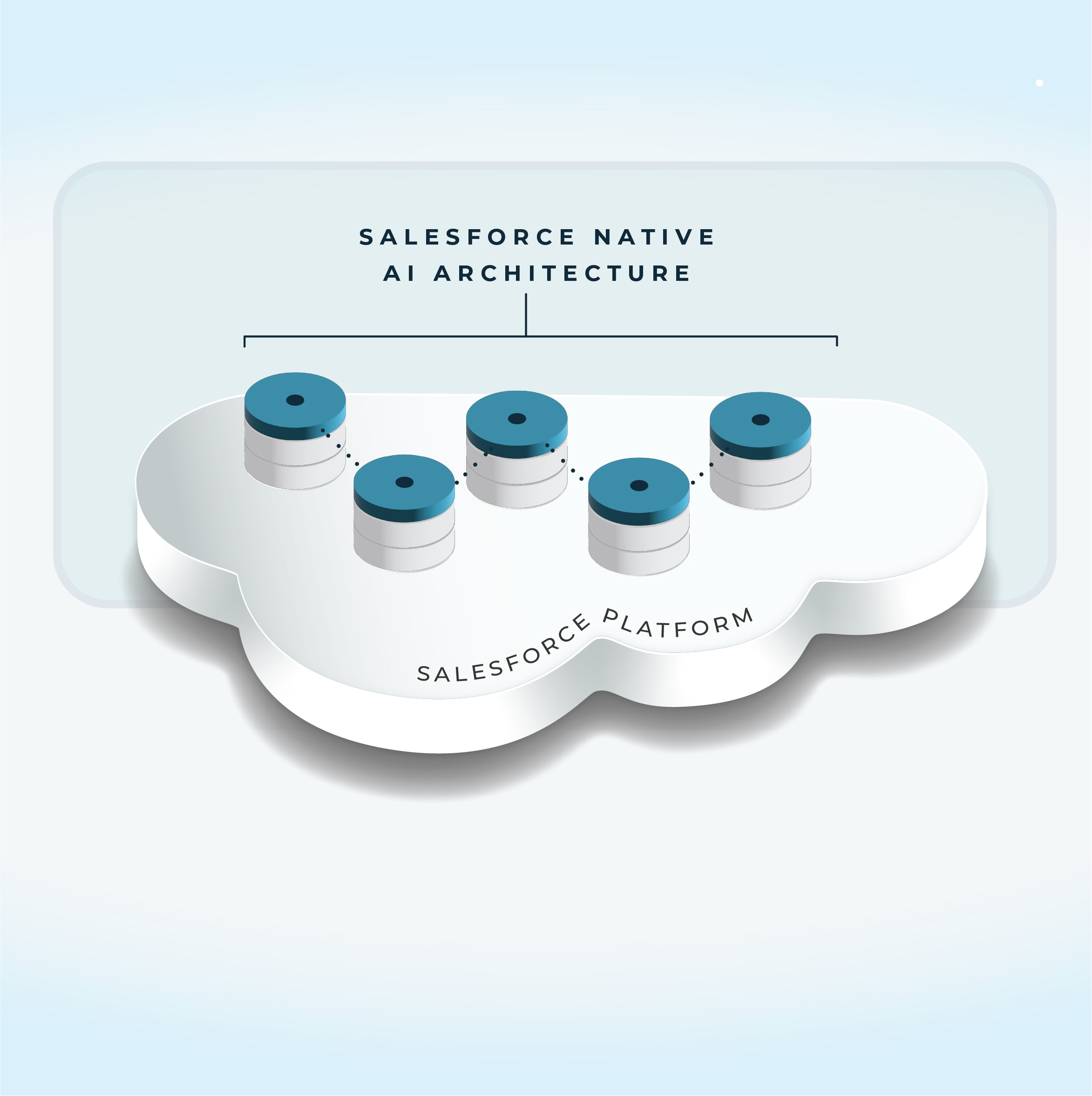
As AI engines (such as Salesforce Agentforce or custom enterprise LLMs) are deployed to automate customer interactions and revenue workflows, data context becomes the limiting factor.
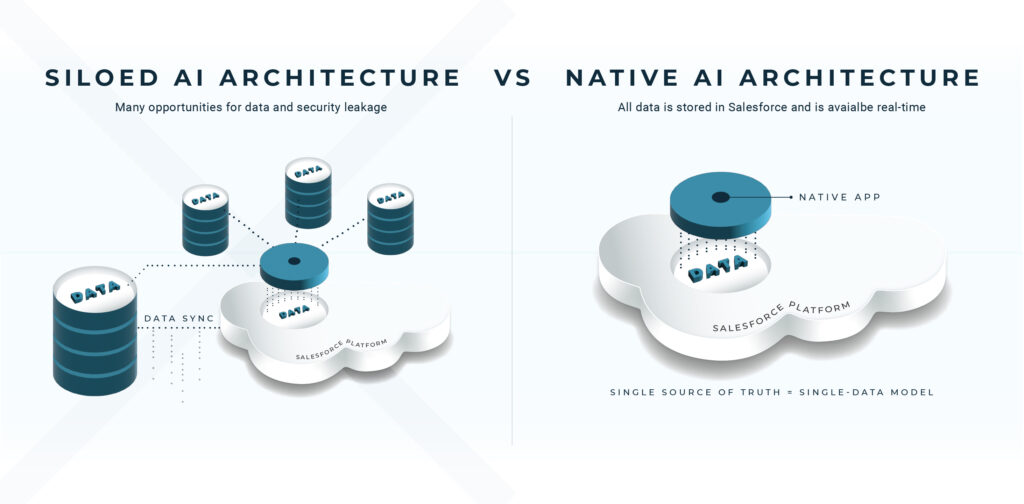
- The Limitation of Siloed AI: If billing logic, usage tracking, and invoice histories are trapped in external databases like Chargebee or Stripe Billing, AI agents in Salesforce operate with incomplete visibility. An AI agent cannot reliably calculate account health, issue proactive renewal quotes, or negotiate upsells if half of the financial record is obscured behind an external API call.
- The Native AI Advantage: With SAASTEPS, the entire customer journey (from original quote to automated recurring invoice and payment reconciliation) lives in a single data platform. AI agents possess real-time context to predict churn, automate dynamic pricing logic, trigger proactive dunning, and execute expansion quotes autonomously without leaving Salesforce.
Architectural comparison matrix
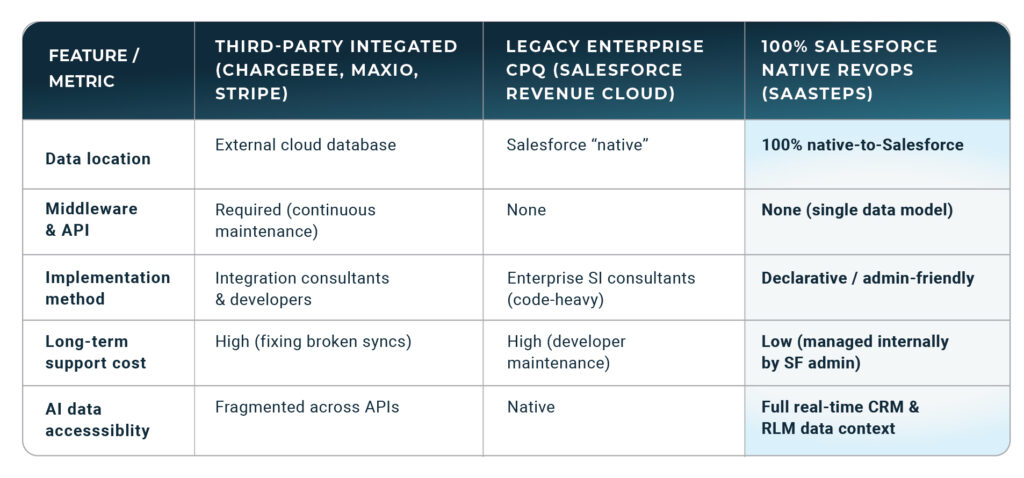
When choosing recurring billing software, looking beyond superficial subscription functionality to evaluate technical architecture avoids long-term operational friction. Siloed systems introduce hidden ongoing consultant costs and fragment customer history. Adopting a 100% native, declarative solution like SAASTEPS eliminates middleware expense, puts control back into the hands of Salesforce admins, and establishes the unified data foundation required for AI-driven revenue execution.