

In today’s business world, keeping sales, marketing, and customer success teams in separate bubbles is like trying to run a race with your shoelaces tied together. Companies are finding out the hard way that split revenue operations lead to missed sales and slower growth. But here’s the good news: bringing these teams together through smart tech and shared data is changing the game. From the first quote to the final renewal, automated revenue lifecycle management systems are making it easier to spot buying patterns and set the correct prices. Want to know how your company can work as one smooth unit? Let’s look at how joining your revenue operations can boost your bottom line.
Why Trust Our Revenue Operations Integration Expertise?
At SAASTEPS, we’ve been at the forefront of Revenue Lifecycle Management (RLM) since 2012, solving complex revenue operations challenges for businesses across industries. Our co-founders, Tim Beck and Ron Costa, bring over two decades of industry experience, leading to the development of our non-provisional patent-pending technology that future-proofs how companies manage their revenue operations. This deep expertise has enabled us to build a comprehensive solution that addresses the real-world challenges businesses face in revenue operations and the seamless integration of all these processes.
Our expertise is built on successfully implementing our seven seamlessly integrated solutions for countless organizations, helping them transform scattered, ungoverned data into AI-ready data that can automate actions and provide valuable insights. We’ve developed and refined our approach through years of hands-on experience, creating a single-data model that unifies the entire revenue lifecycle without requiring custom code or complex integrations. This practical knowledge has been instrumental in developing solutions that not only work in theory but deliver measurable results in real-world business environments.
What Is Revenue Operations Integration and Why It Matters in 2025
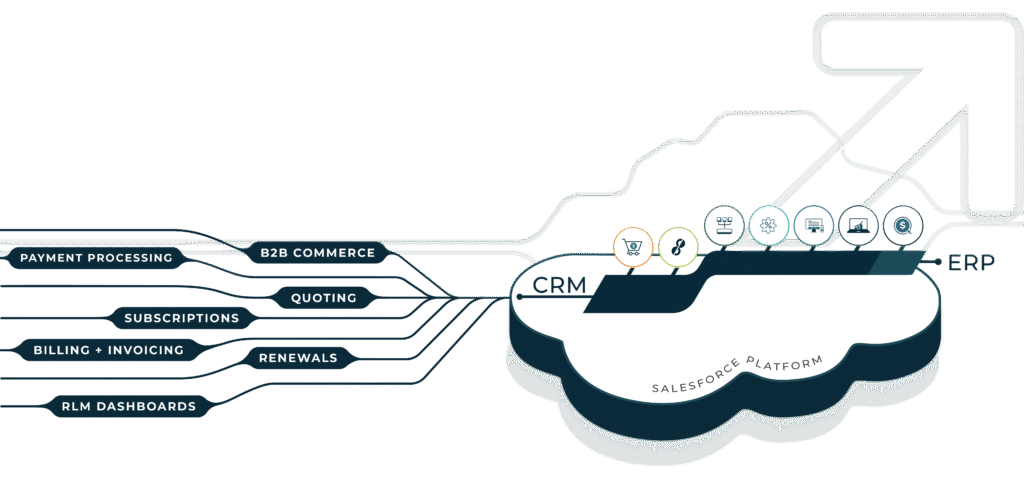
Revenue operations integration has become a critical business strategy as companies recognize that unified departmental workflows directly impact their ability to scale efficiently and maintain competitive positioning in an increasingly complex marketplace.
Revenue Operations Integration means breaking down those old walls between departments. In 2025, running your business with simple, streamlined operations won’t just be an advantage; it’ll be critical to grow, especially for those seeking AI to help automate more of their business processes. That’s why understanding and integrating your revenue operations is non-negotiable for companies wanting to thrive in the next few years. Businesses that implement sophisticated revenue management practices see revenue increases of 10-20% through AI-driven tools integration (Kilanko, 2023).
Defining Revenue Operations Integration Beyond Traditional Silos
How often do essential data and operations remain isolated within departments, hindering overall business growth? This siloed approach causes delays and inefficiencies, especially in revenue operations integration.
To break down these barriers, we must redefine integration beyond traditional silos.
Revenue operations integration means unifying all parts of the revenue lifecycle, from quoting to renewals, into one cohesive system. It’s not just about connecting sales teams with the finance department; it’s about creating a seamless flow of data and processes that enable everyone.
Key aspects of this integration include:
- Unified Data Model: All information lives in one place, a single platform, making it accessible and valuable for everyone.
- Automated Workflows: Tasks that were once manual and error-prone become automated, saving time and reducing mistakes.
- Real-Time Insights: Everyone sees the same up-to-date information, allowing for quicker decisions and better collaboration.
- Scalability: As your business grows, the system grows with you, handling more data and more complex processes without skipping a beat.
How Market Complexity Demands Strategic Revenue Operations Leadership
The market landscape of 2025 won’t wait for companies held back by scattered data and disjointed processes. Businesses must confront market intricacies head-on with robust revenue operations strategies. People are turning to LRM (Lifecycle Revenue Marketing), a customer-obsessed growth strategy for frontline marketing that encompasses the entire customer lifecycle and the full range of buying motions and opportunity types, from initial purchase to retention, from transactional to transformational, which is why complex pricing models, subscription services, and global payment methods demand strategic Marketing leadership that can steer through these complexities. Organizations that have embraced comprehensive revenue lifecycle management with frictionless buyer journey solutions are seeing remarkable results from their lifecycle revenue marketing programs (Arnold, 2023).
With SAASTEPS, revenue operations, we can standardize CPQ processes, simplify billing, and automate renewals, turning chaos into a structured order. We help you tackle quoting inefficiencies, streamline billing headaches, and ensure smooth renewals all inside one platform and Salesforce-native application.
Our solutions unify data and processes, eliminating silos and boosting efficiency. Don’t let LRM complexity overwhelm your Marketing team; take control with a proactive approach utilizing a complete Revenue Lifecycle Management solution that empowers your Marketing, Sales, Operations, through Customer Success, Finance, Accounting, and Renewals.
The Natural Step from Cost Center to Strategic Revenue Growth Center
Historically, companies often viewed their operations departments as mere cost centers, focusing solely on expense reduction. However, this perception has shifted dramatically in recent years.
Operations (Revenue Operations, RevOps, or Sales Operations) departments are now recognized as strategic growth centers that drive customer success and optimize the revenue lifecycle.
Here’s how this natural step has taken place:
- Data Integration: Operations teams are finding ways to structure unstructured data from various departments, creating a unified view of structured customer data. This helps in making informed decisions that boost customer success and expansion.
- Automation: By automating processes like CPQ expansion, billing, and renewals, operations teams reduce errors and improve efficiency, ensuring a smoother revenue lifecycle.
- Customer Focus: With a focus on customer lifecycle management, operations teams can identify opportunities for upsell and cross-sell, enhancing revenue growth.
- Strategic Perspectives: Operations departments provide insightful perspectives into market trends and customer behavior, enabling more strategic decision-making and planning.
This transformation positions operations as a critical function that drives growth and innovation, not just cost savings.
Future Proofing Revenue Operations: The SAASTEPS Approach
In developing our Revenue Lifecycle Management solution, we recognized a critical need in the market: businesses required a unified platform that could handle the entire revenue lifecycle seamlessly. Our solution emerged from understanding that companies struggle with disconnected systems and manual processes that hinder growth.
We created a central platform that automates financial operations, combining seven essential products into one dashboard. This approach wasn’t just about consolidation; it was about transforming how businesses manage their revenue operations. Through our drag-and-drop interface, we’ve made configuration and implementation straightforward, allowing organizations to focus on strategic growth rather than technical complexities.
The real breakthrough came when we developed our non-provisional patent-pending SAASRAM® technology, which powers the entire Revenue Lifecycle suite (Quoting “CPQ”, Subscriptions Management, Deal Desk, Billing, Invoicing, and Renewals Lifecycle Management). Our focus on preventing revenue leakage through automated renewals has proven particularly effective in reducing churn and extending customer lifecycles.
The Hidden Costs of Organizational Silos and How Revenue Operations Integration Solves Them
Traditional organizational systems’ silos trap crucial information (data), causing revenue leakage and poor customer experiences. Revenue operations integration can fix this by utilizing actionable data that can be turned on to manage autonomous revenue lifecycle management tasks.. .
This integration builds hyper-personalized customer journeys through predictive analytics, ensuring smoother operations and happier customers.
Why Traditional Silos Create Revenue Leakage and Customer Experience Gaps
When companies organize their teams and data into isolated departments or systems, they often unintentionally create silos. These silos can cause considerable revenue leakage and negatively impact the customer experience.
Here’s why:
- Delayed Communications: Silos can lead to poor communication between departments. When teams don’t coordinate, essential sales data can be missed, leading to lost renewals or delayed billing.
- Redundant Efforts: Each department might maintain its own version of customer data. This duplication causes teams to spend excess time verifying information instead of focusing on closing deals or enhancing the customer journey.
- Outdated Information: Manually updating separate systems means customer data can quickly become out of date. This can result in missed opportunities for upsells and incorrect billing.
- Fragmented Customer Views: Silos prevent a comprehensive understanding of customers. Without a unified view, it’s hard to see where customers might be struggling or where there are opportunities to enhance their experience.
Transforming these silos into a unified system eliminates these issues, ensuring smooth revenue operations and a seamless customer experience.
Structuring Unstructured Data for Autonomous Revenue Optimization
AI promises to revolutionize revenue operations, but how exactly does it solve the hidden costs of organizational silos that plague many companies? The answer lies in structuring unstructured data and turning it into flawless AI-ready data to be used for autonomous revenue optimization.
Traditional silos create revenue leakage and customer experience gaps, but Structured Data can break down these barriers.
With structured data, companies can automate complex tasks across the revenue lifecycle management spectrum, from quoting and billing to renewals. This automation ensures that AI-ready data is always at hand, reducing errors and enhancing efficiency.
Unlike manual processes, structured data enables quick analysis of vast amounts of data to identify trends, predict customer behavior, and optimize pricing strategies. This means fewer missed opportunities and more accurate forecasting.
Moreover, structured data can streamline the entire revenue lifecycle, making it easier to manage subscriptions, bills, payments, and renewals. By integrating these processes, structured data eliminates the need for redundant data entry and reduces the risk of human error.
This not only saves time but also guarantees that every department has access to the same, up-to-date information, cultivating better collaboration and decision-making.
In essence, structuring unstructured data transforms siloed data into actionable insights, enabling companies to focus on what they do best: growing their business.
Building Hyper-Personalized Customer Journeys Through Predictive Analytics Integration
To deliver exceptional customer experiences, businesses must first demolish the barriers created by organizational silos. Isolated departments hinder the flow of vital customer behavior data, making it impossible to create seamless, personalized journeys.
This is where predictive analytics steps in, advancing how we understand and engage with customers.
Predictive analytics uses historical data to forecast future trends, enabling businesses to anticipate customer needs and behaviors accurately.
Here’s how SAASTEPS leverages predictive analytics to build hyper-personalized customer journeys:
- Unifies Data: Breaks down silos by integrating data from various departments to create a thorough customer profile.
- Anticipates Needs: Uses reports and dashboards to foresee customer behavior, enabling proactive engagement.
- Personalizes Interactions: Tailors communication and offerings based on individual preferences, not just broad trends.
- Refines Over Time: Continuously learns and improves from new data, ensuring increasingly precise predictions and better experiences.
Implementing Revenue Operations Integration: From Tech Stack Harmonization to Cultural Transformation
Implementing revenue operations integration isn’t just about aligning technology; it’s about transforming your culture. Start by evaluating your operations and setting unified goals.
Create an ecosystem that goes beyond basic CRM integration, and establish a strong RevOps leadership structure. Be prepared to overcome resistance with innovative change management and continuous innovation.
Conducting Revenue Operations Assessment and Defining Unified Goals
How can businesses pinpoint the exact issues hindering their revenue operations? The answer lies in conducting a thorough revenue operations assessment. This process isn’t about guesswork; it’s about getting granular and diving deep into the data.
At SAASTEPS, we believe in the influence of data-driven decisions to identify and solve problems within the entire revenue lifecycle.
During this assessment, businesses must focus on key areas where bottlenecks often occur:
- Quoting (CPQ): Examine the efficiency of your product configuration, pricing, and quote generation processes.
- Billing and Invoicing: Investigate the accuracy and timeliness of your billing cycles.
- Renewals: Analyze your renewal rates and customer churn to identify where improvements can be made.
- Data Silos: Identify and address unstructured data systems that create bottlenecks and inefficiencies.
Structuring Unstructured Data Beyond Basic CRM Integration
Creating a seamless revenue operations ecosystem means more than just integrating CRM systems. It requires structuring unstructured data in a single data model with predictive analytics to ensure all revenue functions work together smoothly.
Implementing an autonomous workflow and transforming these functions is feasible, provided companies are willing to embrace the cultural shifts necessary to support such changes.
Harmonizing Customer Data into a single Platform with Predictive Structure Data
When data lives in silos, how can businesses accurately predict customer needs and behaviors? Implementing predictive structured data can break down these silos, providing a clear path to understanding and anticipating customer actions.
To harmonize your customer data, consider these steps:
- Unify Data Sources: Consolidate customer data from all channels into a single platform. This integration ensures a comprehensive view of customer data.
- Automate Data Collection: Implement automated processes to gather and update customer data in real-time, reducing manual errors and delays.
- Implement Dashboard & Reports: Use dashboards and report analytics to analyze data trends, spot patterns, and forecast future behaviors.
- Enable Decision Making: Utilize analytics to inform business strategies, drive better customer interactions, and boost overall revenue operations.
Implementing AI-Driven Workflow Automation Across All Revenue Functions
Transforming revenue operations requires a fully integrated end-to-end lead-to-revenue workflow; it needs flawless structured data to unite all revenue functions under a single, automated workflow. Research by IDC confirms that integrated workflows combining data, AI, and automation significantly improve end-to-end revenue operations performance (IDC, 2024). This doesn’t mean simply throwing Agentforce at your sales process and expecting magic. It involves a thoughtful, structured application of autonomous driven workflows to enhance sales automation, reduce errors, and accelerate the sales cycle. By integrating Agentforce, you streamline not just sales, but also quoting, billing, and renewals, creating a seamless revenue lifecycle with minimal click and only a few prompts.
To envision this, consider the following table:
| Revenue Function | Before Autonomous Actions | After Autonomous Actions |
| Sales | Manual lead, contact, data entry, delayed follow-ups | Automated lead, contact creation, pre-loaded commerce cart, follow-ups, real-time data updates |
| Quoting (CPQ) | Error-prone manual quotes, not sure what to quote | Dynamic, accurate quoting and pre-loaded commerce carts, active promotions, help checking out order |
| Post-Sales Customer Onboarding | Manual creation of account, contact, quote, order, invoices, payments, renewals. | Automatic creation of account, contact, order, subscription, invoice sent on time, transaction ID captured, and renewals auto generated, with automated payment collection activated. |
Implementing autonomous structured revenue data isn’t just about making processes faster; it’s about making them smarter and more efficient revenue growth decisions..
Establishing RevOps Leadership Structure and Cross-Functional Accountability
Although many companies believe that implementing new software solutions will solve their revenue operations challenges, the truth is that technology alone won’t drive lasting change. Establishing a strong RevOps leadership structure and cross-functional accountability is vital.
Here’s how to do it:
- Appoint a RevOps Leader: Select a dedicated leader to oversee all revenue teams. This person ensures alignment and coordination across departments, from sales to finance and customer success. This leader should directly answer to top executives.
- Define Clear Roles and Responsibilities: Guarantee everyone knows their part in the revenue lifecycle. For instance, the sales team focuses on closing deals, while finance handles billing and collections. Define these roles in a clear document shared with all teams.
- Foster Cross-Functional Collaboration: Regular meetings where different departments discuss strategies, share insights, and highlight cross-sell opportunities. This breaks down silos and encourages a unified approach.
- Measure and Report Performance: Implement metrics that track the performance of each team. Regular reports show progress and identify areas needing improvement. This guarantees everyone stays accountable and motivated.
Overcoming Resistance Through Change Management and Continuous Innovation
To streamline revenue operations, it isn’t enough to just implement new technologies; you must also manage the changes that come with them. In fact, enterprises with high-performing IT organizations that effectively manage technological transitions see up to 35% higher revenue growth and 10% higher profit margins compared to their peers (Jerenz et al., 2024). Implementing a new revenue lifecycle management system like SAASTEPS can be challenging, especially when it comes to change management. Resistance is natural when people are asked to alter their daily routines. But continuous innovation requires breaking down this resistance.
The first step is to communicate clearly and often. Explain why the change is happening and how it will benefit everyone. Highlight the pain points in the current processes, like the difficulties in quoting, billing, and renewals, and show how the new system addresses these issues. For example, underscore how SAASTEPS can automate these tasks, making them simpler and more efficient.
Next, involve your team in the process. Ask for their input and address their concerns. This doesn’t mean you should give in to every complaint, but it does mean you should listen and respond thoughtfully. Remember, the goal is to create a culture that embraces continuous innovation, not just to implement a new tool. Make it clear that this change is about making their jobs easier and the company more successful.
Lastly, provide adequate training and support. Ensure everyone knows how to use the new system and understands its benefits. This investment in your team will pay off in smoother operations and greater acceptance of the change.
Resistance to change is normal, but it can be overcome with the right approach. Don’t shy away from it; tackle it head-on with clear communication, inclusion, and support. This is how you turn resistance into an opportunity for growth.
Frequently Asked Questions
How Long Does Full Integration Take?
The full integration for SAASTEPS typically takes 4-8 weeks. This timeframe includes configuring and deploying essential revenue lifecycle management processes such as quoting, subscriptions, and billing.
Can Existing Tools Be Used Alongside?
Yes, existing tools can be used alongside SAASTEPS. The platform is designed to unify data and processes but can coexist with other systems due to its native Salesforce architecture.
How Is Data Migrated Securely?
Secure data migration is guaranteed through Salesforce’s enterprise-grade security and compliance features. SAASTEPS, being Salesforce-native, utilizes these protocols, including encryption, access controls, and audit trails, to safeguard data during transfer. The Migration Starter Package further supports this process with configured deployment of essential RLM components.
Conclusion
Unifying revenue operations isn’t just a trend; it’s a necessity for sustained growth. Siloed data and disjointed processes waste time and money. By 2025, integrating your revenue lifecycle won’t be a luxury, it’ll be indispensable. Automation and AI aren’t scary, they’re your friends in this journey. Embrace them. Break down those silos, streamline operations, and watch your business thrive. SAASTEPS is here to help you tackle CPQ, billing, and renewals challenges head-on. Transform your data, transform your growth.
References
Arnold, J. (2023, February 13). B2B organizations are primed for growth when lifecycle, revenue, and marketing unite. Forrester. https://www.forrester.com/blogs/b2b-organizations-are-primed-for-growth-when-lifecycle-revenue-and-marketing-unite
Das, S., & Hassan, H. (2021). Impact of sustainable supply chain management and customer relationship management on organizational performance. International Journal of Productivity and Performance Management, 71(6), 2140-2160. https://doi.org/10.1108/ijppm-08-2020-0441
IDC. (2024, December 20). Harnessing actionable insights for future-ready strategies. https://blogs.idc.com/2024/12/20/harnessing-actionable-insights-for-future-ready-strategies/
Jerenz, A., Storozhev, A., D’Aversa, L., et al. (2024, November 27). How high performers optimize IT productivity for revenue growth: A leader’s guide. McKinsey & Company. https://www.mckinsey.com/capabilities/mckinsey-digital/our-insights/how-high-performers-optimize-it-productivity-for-revenue-growth-a-leaders-guide
Kilanko, V. (2023). Leveraging artificial intelligence for enhanced revenue cycle management in the United States. International Journal of Scientific Advances, 4(4). https://doi.org/10.51542/ijscia.v4i4.3