

Revenue management becomes a nightmare when companies scatter their financial operations across different tools. Many mid-market businesses lose millions each year by keeping their commerce, payments, and billing systems separate. The constant manual data entry leads to mistakes, delayed payments, and frustrated customers. Additionally, staying within regulations becomes increasingly challenging with each disconnected system. SAASTEPS identified this problem and developed an innovative solution: SAASRAM and SAASPAY, their patent-pending Autonomous Revenue Lifecycle Management platform. This single system brings all revenue tasks together, makes sense of messy data, and cuts down on repetitive work. The result? Fewer clicks, less data entry, better compliance, and room to grow. Let’s explore how this platform helps businesses save money and time while keeping customers happy.
Why Trust Our Revenue Lifecycle Management Expertise?
With over two decades of industry experience, our founders, Tim Beck and Ron Cost, have been at the forefront of solving Revenue Lifecycle Management complexity since 2012. We’ve witnessed firsthand how siloed revenue systems cripple mid-market companies, leading to the development of our non-provisional, patent-pending solution that has transformed the way businesses handle their revenue operations.
Our expertise stems from working closely with numerous organizations that struggle with fragmented revenue systems. This deep understanding led us to create SAASTEPS as a unified platform that structures unstructured data into one cohesive model. Our solution isn’t just theoretical; it’s built on real-world experience helping companies eliminate revenue leakage, reduce operational complexity, and achieve scalable growth through our comprehensive suite of solutions, including SAASRAM® and SAASPAY®.
Understanding Siloed Revenue Systems and Their True Cost Impact
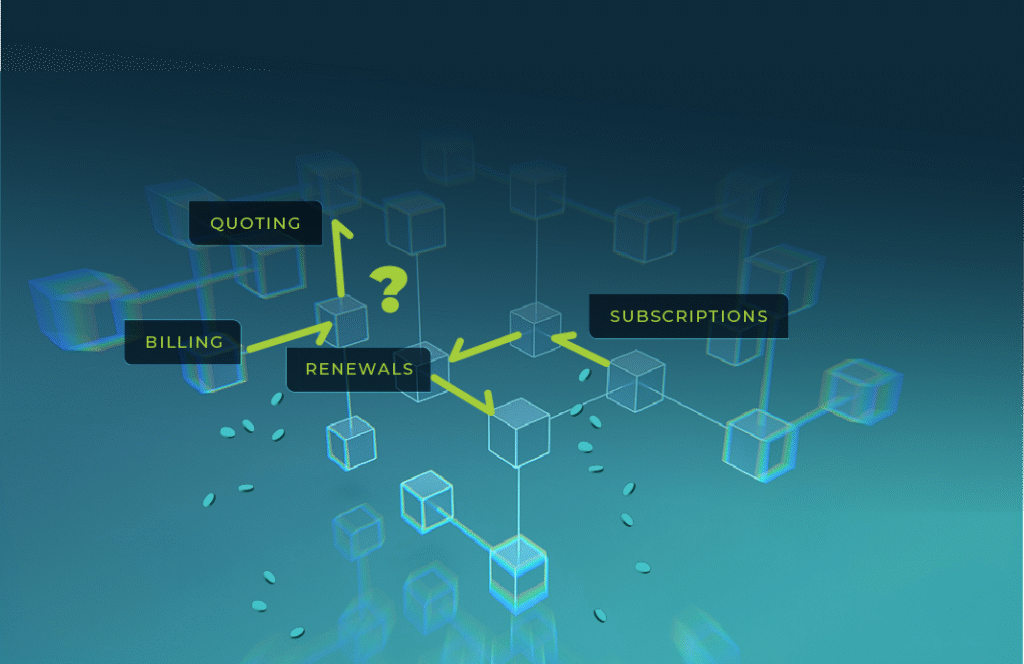
Mid-market companies frequently struggle with revenue system fragmentation, where multiple disconnected tools create data silos that inflate operational costs through redundant processes and manual reconciliation efforts.
Siloed revenue systems often arise in mid-market companies due to disparate tools handling commerce, payments, quoting, subscriptions, billing, invoicing, and renewals separately. Companies that utilize integrated revenue management systems tend to see efficiency increases of up to 30% in their revenue lifecycle processes (George et al., 2019).
This fragmentation leads to hidden costs that decision-makers must acknowledge and address. SAASTEPS counters this by structuring all revenue data into one model, enabling automation and reducing manual data entry.
What Makes Revenue Systems Siloed in Mid-Market Companies
Mid-market companies often grapple with disconnected revenue systems, a challenge that becomes increasingly evident as they scale. These systems result in data silos, where critical information is isolated and inaccessible across different departments. This fragmentation arises from several factors. Companies that effectively address these challenges through integrated IT systems reap significant benefits. High-performing IT teams experience up to 35% higher revenue growth and 10% higher profit margins (Jerenz et al., 2024).
First, different departments use separate tools for commerce, payments, quoting, subscriptions, billing, invoicing, renewals, and revenue recognition. Each tool operates independently, making it hard to standardize processes and share actionable data.
Additionally, as companies grow, they often layer new tools on top of old ones, creating a patchwork of disconnected systems. Each addition might solve an immediate problem, but it adds to the overall intricacy.
This is where SAASTEPS offers a solution. By structuring unstructured data into a single, cohesive model, SAASTEPS facilitates automation and straight-through processing. This integration reduces the need for manual data entry and the number of clicks required to complete tasks, making the entire revenue lifecycle more efficient.
With SAASTEPS, every component from SAASPAY® for Commerce and Payments and SAASRAM® for Quoting, Billing, and Renewals works seamlessly, eliminating the silos that hinder growth. This approach enables mid-market companies to focus on scaling without the burden of disconnected systems.
The Financial Reality: Why These Hidden Costs Matter for Decision-Makers
When decision-makers consider the financial reality of their tech stacks, they often overlook the hidden costs of siloed revenue systems. These costs can substantially impact the bottom line, making it essential to understand their true extent. Here are some key points to consider:
Data Management Inefficiencies: Siloed systems lead to redundant data entry and management. This not only wastes time but also increases the risk of errors.
- SAASTEPS unifies data from commerce, payments, quoting, subscriptions, billing, invoicing, and renewals into a single model, reducing clicks and data entry.
Lack of Actionable Data: Disparate systems can’t provide an all-encompassing view of the revenue lifecycle.
- SAASTEPS delivers real-time insights, making data actionable from day one. This supports smarter decisions and forecasting.
Missed Automation Opportunities: Siloed systems often necessitate manual interventions for tasks such as invoicing and renewals.
- SAASTEPS’ Autonomous Revenue Lifecycle Management automates these processes, ensuring nothing slips through the cracks with SAASRAM® and SAASPAY®.
Compliance and Security Risks: Siloed systems can lead to compliance gaps and security vulnerabilities.
- SAASTEPS, being natively built on Salesforce, ensures enterprise-grade security and compliance, standardizing processes and reducing hidden costs.
The Multi-Million Dollar Price Tag of Fragmented Revenue Operations
Fragmented revenue operations carry a hefty price tag, often costing businesses millions. Direct revenue loss occurs due to data fragmentation and manual errors, which multiply operational costs through increased IT support and inefficient team processes. Data silos and fragmented data infrastructures limit organizations’ ability to share data efficiently, reduce insight generation, and hinder cross-functional revenue growth efforts (Sampath, 2025).
Furthermore, customer retention suffers, leading to missed growth opportunities and potential compliance penalties. SAASTEPS addresses these challenges by unifying commerce, payments, quoting, subscriptions, billing, invoicing, renewals, and revenue recognition into a single, seamless, and automated system, thereby preventing such costly setbacks.
Direct Revenue Loss from Data Fragmentation and Manual Errors
Although businesses invest heavily in tech stacks to manage their revenue operations, the hidden costs of siloed systems often go unnoticed until they translate into direct revenue loss. Data fragmentation and manual errors can severely impact the bottom line. These issues stem from poorly managed data sharing and inefficient manual processes.
Here are key areas where these problems hit hardest:
- Lost Invoices: Manual invoicing leads to misplaced or incorrect invoices, delaying payments and causing cash flow issues.
- Delayed Collections: Inefficient data sharing between departments results in delayed collections, impacting revenue recognition.
- Order Errors: Manual order entries often result in inaccuracies, leading to customer dissatisfaction and potential churn.
- Compliance Issues: Data fragmentation can cause compliance gaps, resulting in hefty fines and loss of customer trust.
To mitigate these, you can employ SAASTEPS for Autonomous Revenue Lifecycle Management, which encompasses components such as SAASPAY for commerce and payments, SAASRAM for quoting (CPQ), subscriptions, billing, invoicing, and renewals.
SAASTEPS structures unstructured data into a single model, supporting automation, standardizing processes, and reducing manual data entry. This non-provisional, patent-pending solution eliminates the hassles of siloed systems, ensuring smooth and scalable growth.
Operational Cost Multiplication: IT Support, Reconciliation, and Team Inefficiencies
While data fragmentation and manual errors can lead to direct revenue losses, the operational costs of maintaining siloed revenue systems can be equally devastating. The need for extensive IT support to manage disparate systems, the time-consuming reconciliation of fragmented data, and the team inefficiencies that arise from juggling multiple platforms all contribute to a considerable financial burden.
These challenges often result in hidden costs that can escalate quickly, creating additional revenue leaks and hindering overall business performance.
SAASTEPS addresses these issues by unifying commerce, payments, quoting, subscriptions, billing, invoicing, renewals, and revenue reporting into a single, cohesive platform. Our non-provisional, patent-pending solution, built natively in Salesforce, structures unstructured data into a single model, thereby reducing clicks and data entry errors.
This standardization enables seamless automation and straight-through processing, thereby minimizing the need for ongoing IT intervention and reconciliation efforts.
The Customer Experience Tax: Retention Challenges and Missed Growth Opportunities
When revenue systems operate in silos, customers often bear the brunt of the inefficiencies, leading to a phenomenon we call the “Customer Experience Tax.” This tax isn’t levied by governments but is a byproduct of fragmented operations that cause retention challenges and missed growth opportunities.
Here are the key ways this tax impacts customer experiences and satisfaction:
- Inconsistent Data: Siloed systems often lead to data discrepancies, resulting in confused customers receiving incorrect invoices or misaligned service renewals.
- Delayed Responses: Fragmented operations slow down response times, impacting customer satisfaction as issues take longer to resolve.
- Misaligned Communication: When different departments use separate systems, communication gaps arise, leading to inconsistent messaging and subpar customer service.
- Lack of Personalization: Without a unified view of the customer lifecycle, it is challenging to deliver personalized experiences, resulting in missed opportunities to upsell or cross-sell.
Solutions like SAASTEPS, with its integrated components for commerce, payments via SAASPAY, quoting, subscriptions, billing, invoicing, and renewals, address these issues by structuring unstructured data into one model.
This standardizes processes, supports automation, and reduces manual data entry, leading to enhanced customer satisfaction and improved retention rates.
Compliance Risks and Regulatory Penalties
Fragmented revenue operations not only inconvenience customers but also expose businesses to significant compliance risks and regulatory penalties, which can result in a multi-million-dollar price tag. Research indicates that implementing predictive analytics within revenue management systems results in enhanced financial process efficiency (Huang, 2024).
When data is scattered across multiple systems, ensuring accuracy and adhering to compliance standards becomes nearly impossible. This disorganization invites regulatory scrutiny, resulting in substantial penalties for non-compliance.
For instance, failure to accurately report financial transactions or properly handle customer information can result in steep fines and damage to a company’s reputation.
How Siloed Revenue Systems Kill Business Agility and Scalability
Siloed revenue systems choke business agility and scalability. Disconnected data sources slow decision-making, while scattered tools hinder team collaboration.
This hit is particularly detrimental to modern revenue models, such as subscriptions or usage-based pricing.
Decision-Making Delays from Disconnected Data Sources
While businesses increasingly rely on various software solutions to manage their revenue lifecycle, the disconnection between these systems often results in considerable delays in decision-making. When data is scattered across different platforms, it hinders the ability to make timely and informed decisions.
Here’s why disconnected data sources constitute a significant obstacle:
- Lack of Actionable Data: Without a unified view, key metrics are buried in silos, making it hard to identify trends and opportunities.
- Increased Administrative Burden: Manual data reconciliation and redundant processes waste time and resources, impacting scalability.
- Delayed Insights: Real-time data is crucial for informed decision-making, but disconnected systems often provide outdated information.
- High Error Rates: Human error resulting from manual data entry and transfers can lead to costly mistakes, negatively impacting overall business performance.
SAASTEPS addresses these issues by standardizing data into a single model, automating processes from commerce to revenue recognition, and minimizing manual data entry.
This results in less decision-making delay, enhanced accuracy, and faster time-to-revenue, making every part of the system, from SAASPAY for commerce to payments, and SAASRAM for Quoting (CPQ), Billing, Invoicing, and Renewal work seamlessly together.
Revenue Operations Scaling Limitations and Team Collaboration Breakdown
The inability of many businesses to scale their revenue operations efficiently often stems from a fundamental flaw in their tech stack: the use of disparate systems for commerce, payments, quoting, subscriptions, billing, invoicing, renewals, and revenue recognition. In fact, approximately 75% of organizations struggle to integrate their revenue management processes due to these disconnected systems, resulting in significant revenue loss opportunities (Dauxert & Bonometti, 2022). This fragmented approach hinders team collaboration and slows down decision-making processes.
When data is scattered across multiple platforms, it becomes difficult for teams to access actionable data and make informed decisions. Furthermore, the lack of a unified system can lead to errors, delays, and inefficiencies that stifle business agility.
This is where SAASTEPS comes in, offering a non-provisional, patent-pending solution that standardizes revenue operations into a single data model. By structuring unstructured data into one cohesive system, SAASTEPS supports automation and straight-through processing, reduces clicks and data entry, and enhances overall team collaboration.
With integrated components like our B2B Commerce Platform, SAASPAY for payments, and SAASRAM for quoting, SAASTEPS ensures that your revenue operations scale seamlessly, fostering a collaborative environment where all essential functions are harmonized under Autonomous Revenue Lifecycle Management.
Modern Revenue Model Adoption Barriers (Subscription, Usage-Based Pricing)
Developing business agility and scalability often involves adopting modern revenue models, such as subscriptions and usage-based pricing. However, siloed revenue systems create substantial barriers to this adoption. Here are the top challenges:
- Complexity in Implementation: Traditional systems aren’t designed for subscription-based pricing, leading to complicated workarounds and increased manual effort.
- Revenue Leakage: Siloed data and manual processes result in missed billing opportunities, delayed payments, and ultimately, lost revenue.
- Lack of Actionable Data: Without a unified data model, gaining insights to drive decisions becomes difficult, hindering growth and innovation.
- Inflexible Systems: Legacy systems often can’t support usage-based pricing, limiting a company’s ability to adjust to market demands.
Siloed revenue systems fail where SAASTEPS excels. SAASTEPS structures unstructured data into a single model, supporting commerce, payments via SAASPAY®, quoting with SAASRAM®, subscriptions, billing, invoicing, renewals, and revenue recognition.
This approach reduces clicks, minimizes data entry, and enables straight-through processing. By providing a single source of truth, SAASTEPS enables seamless automation, allowing businesses to quickly pivot and scale with modern revenue models.
Proven Strategies to Eliminate Siloed Revenue Systems Cost
Siloed revenue systems create considerable drag on operational efficiency and revenue growth. Integrating a unified revenue platform, such as the SAASTEPS standard, standardizes data flow across all operations, from commerce and payments to quoting, subscriptions, billing, invoicing, and renewals.
This integration, coupled with RevOps automation solutions like SAASRAM® and SAASPAY®, converts unstructured data into actionable intelligence, reducing manual data entry and clicks, thereby delivering measurable ROI and scalable growth.
Unified Revenue Platform Integration for Seamless Data Flow
Although integrating various revenue management tools may seem like an effective strategy, it often results in siloed data and disjointed processes that hinder operational efficiency. Managing payments in one system, tracking subscriptions in another, and handling sales quotes in yet another creates a fragmented landscape. This disconnect leads to errors, delays, and a lack of actionable data, impeding decision-making and growth.
Enter unified revenue platform integration. By standardizing all revenue-related processes within a single system, organizations can eliminate the inefficiencies inherent in traditional tech stacks.
A unified platform integrates:
- B2B commerce for a seamless buyer experience.
- Payment processing via SAASPAY®.
- Quoting and CPQ for dynamic pricing.
- Subscription management for automated renewals.
SAASTEPS structures unstructured data into one cohesive model, supporting automation and straight-through processing. This reduces clicks, minimizes data entry, and ensures that all components, from commerce to revenue recognition, work harmoniously.
Unified data empowers CEOs, CFOs, and other executives to make informed decisions based on real-time perspectives, rather than relying on guesswork. Our non-provisional patent-pending solution for Autonomous Revenue Lifecycle Management Standardizes operations and paves the way for scalable, cost-effective growth.
Embracing a unified platform like SAASTEPS isn’t just a strategic choice; it’s a necessity for tech stacks aiming for seamless data flow and operational excellence.
RevOps Automation Solutions That Deliver Measurable ROI
Building on the benefits of a unified revenue platform, it’s clear that merely integrating systems isn’t enough. To truly eliminate the hidden costs of siloed revenue systems, you need RevOps automation solutions that deliver measurable ROI. This is where SAASTEPS comes in. Our platform structures unstructured data into a single model, ensuring thorough data governance and reducing the manual data entry burden on your sales team. By automating processes across commerce, payments, quoting, subscriptions, billing, invoicing, renewals, and revenue recognition, SAASTEPS minimizes clicks and streamlines workflows.
Here’s how SAASTEPS stacks up against traditional systems:
| Traditional Systems | SAASTEPS |
| Manual data entry and siloed data | Single data model with strong governance |
| Multiple integrations required | No integrations needed |
| High risk of revenue leakage | No leakage with autonomous processing |
| Slow and error-prone manual processes | Automated workflows for speed and accuracy |
| Limited visibility into revenue lifecycle | Real-time insights and actionable data |
With SAASRAM® for quoting and SAASPAY® for payments, SAASTEPS provides a holistic, non-provisional patent-pending solution that standardizes your revenue lifecycle management. Don’t let siloed systems hold you back. Embrace automation and watch your ROI grow.
Frequently Asked Questions
How Do Siloed Systems Affect Customer Experience?
Siloed systems can lead to inconsistent data, delayed responses, and fragmented interactions, resulting in a disjointed and frustrating customer experience.
What Are the Signs of Siloed Revenue Systems?
Signs of siloed revenue systems include data inconsistencies, manual data entry, delayed reporting, lack of real-time visibility, and difficulty in tracking customer interactions across departments. Moreover, redundant processes, slow responsiveness to market changes, and decreased customer satisfaction due to fragmented experiences indicate siloed systems.
Can Siloed Systems Impact Regulatory Compliance?
Yes, siloed systems can impact regulatory compliance by causing data inconsistencies, hindering audit trails, and delaying mandatory reporting, increasing the risk of non-compliance penalties.
How Can Mid-Market Companies Justify the Cost of Unifying Revenue Systems?
Mid-market companies can justify the cost of unifying their revenue systems by considering the benefits of reduced operational complexity, increased efficiency, improved accuracy, and enhanced revenue velocity. Furthermore, unified systems enhance regulatory compliance and customer retention, further saving costs and driving long-term growth.
What Are the Immediate Benefits of Integrating Revenue Systems?
Integrating revenue systems immediately enhances data accuracy and accessibility, streamlines operational workflows, reduces manual errors, and provides real-time perspectives for informed decision-making. This unification leads to faster revenue recognition, enhanced customer experiences, and lower operational costs, ultimately driving overall business efficiency and growth. Furthermore, it ensures compliance and security, thereby minimizing the risks associated with disparate systems.
Conclusion
Siloed revenue systems cost mid-market tech companies dearly. Don’t overlook this. Standardizing with SaaSteps’ integrated platform, SAASRAM® and SAASPAY®, combines commerce, payments, quoting, subscriptions, billing, invoicing, renewals, and revenue recognition. This transforms unstructured data into one actionable model, automates processes, reduces manual entry, and saves money. It’s not about more tools; it’s about fewer, smarter ones.
References
Dauxert, T., & Bonometti, M. (2022). From surviving to thriving: The new face of revenue management strategies in a crisis era. https://doi.org/10.4108/eai.6-10-2022.2325692
George, B., Walker, R., & Monster, J. (2019). Does strategic planning improve organizational performance? A meta‐analysis. Public Administration Review, 79(6), 810-819. https://doi.org/10.1111/puar.13104
Huang, S. (2024). Design and implementation of an intelligent financial management system based on an enterprise legal system. Journal of Organizational and End User Computing, 36(1), 1-25. https://doi.org/10.4018/joeuc.350224
Jerenz, A., Storozhev, A., & D’Aversa, L., et al. (2024, November 27). How high performers optimize IT productivity for revenue growth: A leader’s guide. McKinsey & Company. https://www.mckinsey.com/capabilities/mckinsey-digital/our-insights/how-high-performers-optimize-it-productivity-for-revenue-growth-a-leaders-guide
Sampath, G. K. (2025, January 10). Executive Summary: ISG Provider Lens™ Advanced Analytics and AI Services – U.S. 2024 (Specialist). ISG Executive Insights. https://ei.isg-one.com/Research/_MarketingPage?dashboardID=201a11ca-c115-4a33-a9f7-941eceefbbd1&documentId=LMbCO0vJcB&isLocked=false